VIGO Photonics Drives Innovation as a Technical Leader in the PhotoGeNic Project
28 July 2026
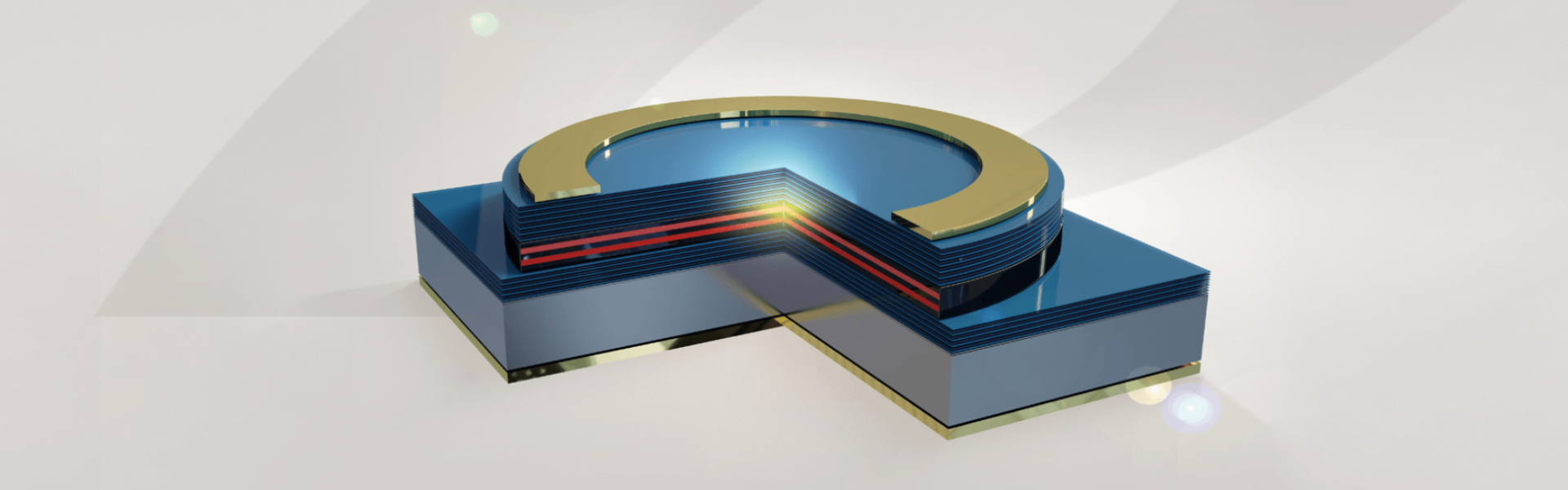
VIGO Photonics’ epitaxy team successfully developed advanced MOCVD epitaxial growth of high-performance VCSEL structures on large-diameter Germanium substrates under the PhotoGeNIC project.
The international PhotoGeNIC Project is a pioneering initiative focused on introducing Germanium (Ge) substrates to the VCSEL (Vertical-Cavity Surface-Emitting Laser) manufacturing process. By replacing traditional gallium arsenide (GaAs) substrates with Germanium, the project aims to potentially unlock significant manufacturing and environmental benefits, including:
- Increased production yield
- A substantial reduction in defects introduced during the manufacturing process
- A significantly minimized environmental footprint
Beyond just growing these novel structures, the consortium’s goal is to compare and demonstrate the performance of Germanium and traditional GaAs substrates.
What is VIGO’s role?
As the technical leader, VIGO Photonics played a critical role in the project, taking charge of growing VCSEL structures on both large-diameter Germanium and GaAs substrates. In this role, VIGO was also responsible for the comparative characterization of VCSEL Ge and GaAs epi-structures, as well as the optimization of basic process steps. Through these efforts, the company is driving both the scientific research and strategic development of next-generation VCSEL technology.
During the project's duration, VIGO has successfully reached major technical achievements: successfully created and optimized epitaxy processes for VCSEL epi-stacks on both 4-inch GaAs and Ge substrates, what led to improvement of laser’s spectral quality, optical power and reliability, as well as a notable reduction in bowing (a measure of wafer warpage) on Ge substrates,
Wide spectrum of application
Successful development of VCSEL’s structures unlocks many potential commercial applications, including:
- Optical data communication & Optoelectronic Circuits for AI
- Automotive LiDAR and 3D Cameras for Autonomous Vehicles - Long-range sensing and environment mapping
- Environmental Monitoring- detection and measurement of gases, including carbon dioxide, methane, and pollutants
- Consumer Photonics- 3D sensing, facial recognition, and next-gen AR/VR wearable device integration.
- Biomedical Sensing- Non-invasive health diagnostics and stable biosensors for remote patient monitoring
Now in its final stage, the PhotoGeNic project is scheduled for completion in September 2026. The initiative is fully funded by the European Union’s Horizon Europe research and innovation programme, with a total grant of €4,788,752.00.
This project was developed by collaboration between the PhotoGeNIC consortium partners comprising: TECHNIKON (Austria), Łódź University of Technology (Poland), pmdindustrial GmbH (Germany), The French National Centre for Scientific Research - CNRS (France), UMICORE (Belgium), XenomatiX (Belgium), Łukasiewicz – Institute of Microelectronics and Photonics (Poland) and VIGO Photonics S.A. (Poland).
Learn more about the PhotoGeNIC project >>