NDIR (Non-Dispersive Infrared) Technology - A Precise Gas Detection Method

NDIR (Non-Dispersive Infrared) technology has become one of the most popular and reliable methods for real-time gas detection.
NDIR stands for Non-Dispersive Infrared and it is one of the easiest and most popular methods of gas spectroscopy. It is considered a safe and relatively cost-effective, yet powerful method for detecting low concentrations of various gases or small changes in the concentration in real time - all thanks to the unique way in which infrared (IR) light interacts with gas molecules. These two parameters - high sensitivity and short reaction time - have helped NDIR sensors to become a widespread industry standard. Naturally there is a lot of variety in available models and the main differentiators between them are components used inside.
How an NDIR Sensor Works
An NDIR sensor consists mainly of three parts: a light source, a gas cell and a detector. The IR radiation from the light source is collimated, then shone onto the gas sample in the cell of variable length. Each measured gas absorbs selected IR wavelengths, letting through only a small portion. Then the radiation is collected by the detector. The whole process of absorption is governed by Bouguer-Lambert-Beer law (see formula below), which states that the parameters of our NDIR sensor which influence the performance are: strength of light source, sensitivity of the detector and length of the gas cell where radiation interacts with molecules.
I=I0exp-()Nx
Formula 1. Bouguer-Lambert-Beer law. I is the intensity of light, σ is the absorption coefficient dependent on the wavelength λ, N is the gas concentration and x is the optical path length.
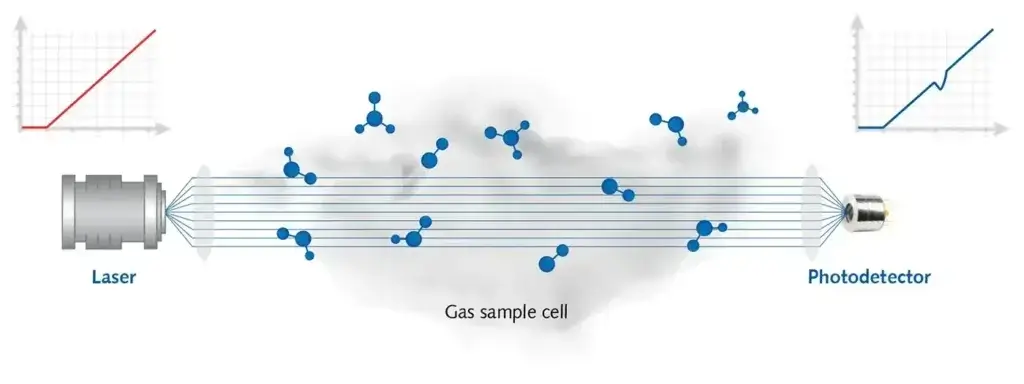 Figure 1. General laser absorption spectroscopy schematics.
From Thermal Light Sources to Semiconductor Detectors
Most NDIR sensors utilize thermal light sources, which have broadband emission spectra. That means a need for elements selecting the wavelengths of interest (i.e. those absorbed by specific gases) and this is usually done via bandpass optical filters mounted before the detectors. Thermal sources are cost-effective and quite high-power, but have some disadvantages. Most importantly, their emission properties change over time due to aging of the heated elements. For an NDIR sensor this means a need for periodic calibration, so that the concentration calculation from Bouguer-Lambert-Beer formula always stays true. Thermal sources also support only slow modulation of the signal - however the speeds achievable by modern sources are sufficient for NDIR systems.
The length of the optical path through the gas sample depends only on the overall design of the device and the size constraints and is easily modifiable. Therefore the component which has the biggest influence on the NDIR sensor’s performance is the IR detector. Its detectivity - a figure of merit corresponding to signal-to-noise ratio - translates directly to the lower limit of light intensity detectable by the component. In consequence, the limit of detection (LoD) of small concentrations of gases improves.
High detectivity stems first and foremost from the core of the detector itself, i.e. the absorber converting light intensity into electrical signal. Traditionally used thermal detectors (bolometers, pyroelectrics) are inherently limited in their detectivity by their very principle of operation. Semiconductor photon detectors (like photodiodes) are superior in that regard, especially when well suited to the wavelength range of interest. The III-V based detectors (with absorbers made from compounds like InAs, InAsSb or Type-II Superlattices) are currently the best choice for NDIR sensors, combining high detectivity with resistance to adverse ambient conditions (high temperatures, shocks, vibrations, etc.) and reliability - semiconductor devices are not prone to degradation over time unlike the thermal devices.
Multi-Channel Detection, Miniaturization, and Stability
Another aspect of NDIR sensor design is space effectiveness - especially taking into account that normally more than one detection channel is needed. A good practice is to have a detection channel with a bandpass filter centered on the wavelength absorbed by a gas of interest, and another reference channel whose bandpass filter lets through a “neutral” wavelength not absorbed by any specific gas. This layout guarantees a great reduction in the number of false alarms, as if there happens to be any other factor reducing the light intensity on the detectors, it will also show up on the reference channel and digital signal correction could be then performed. Sometimes there are more than one detection channels - this strictly depends on the requirements of the end user and the possibility to reduce the form factor enough to fit into constraints.
 |
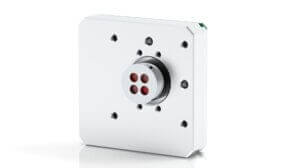 |
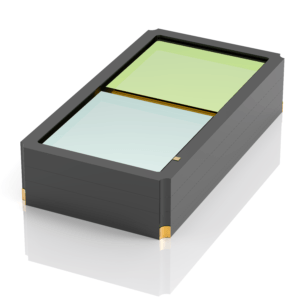
| Figure 2. SMD | Figure 3. 4EF-I-5 |
VIGO Photonics’ detectors are a natural fit in modern NDIR systems. Their semiconductor principle of operation ensures reliable and effective operation, and great flexibility in adapting to specific needs means that numerous mechanical layouts are possible. Features like multi-element detectors or integration of bandpass filters directly on housing reduce form factor. VIGO detectors suit both very small, cost-effective and high-volume sensors with the SMD-packaged III-V detector line, as well as high-end NDIR systems with long optical path lengths and extremely low LoDs with the 4-channel complete detection modules. Custom designs and modular supporting electronics are also available.
Author: Jędrzej Mijas, Application Engineer Lead
Contact our Technical Support team for specific information on our capabilities.